
Does Laser for Broken Capillaries Actually Work?
Capillaries are the smallest blood vessels in the body. These structures connect arteries to veins and deliver oxygen and other nutrients to organs throughout the body. “Broken” capillaries are dilated vessels just below the skin’s surface that have become stretched or damaged, appearing as thin red or purple lines. The medical name is Facial Telangiectasia for dilated capillaries, which are colloquially known in the esthetics industry as broken capillaries.
Laser treatments have become a leading solution for dilated capillaries, particularly on the face. Join us to learn how laser therapy helps eliminate these vascular lesions!
How does laser treatment work for dilated capillaries?
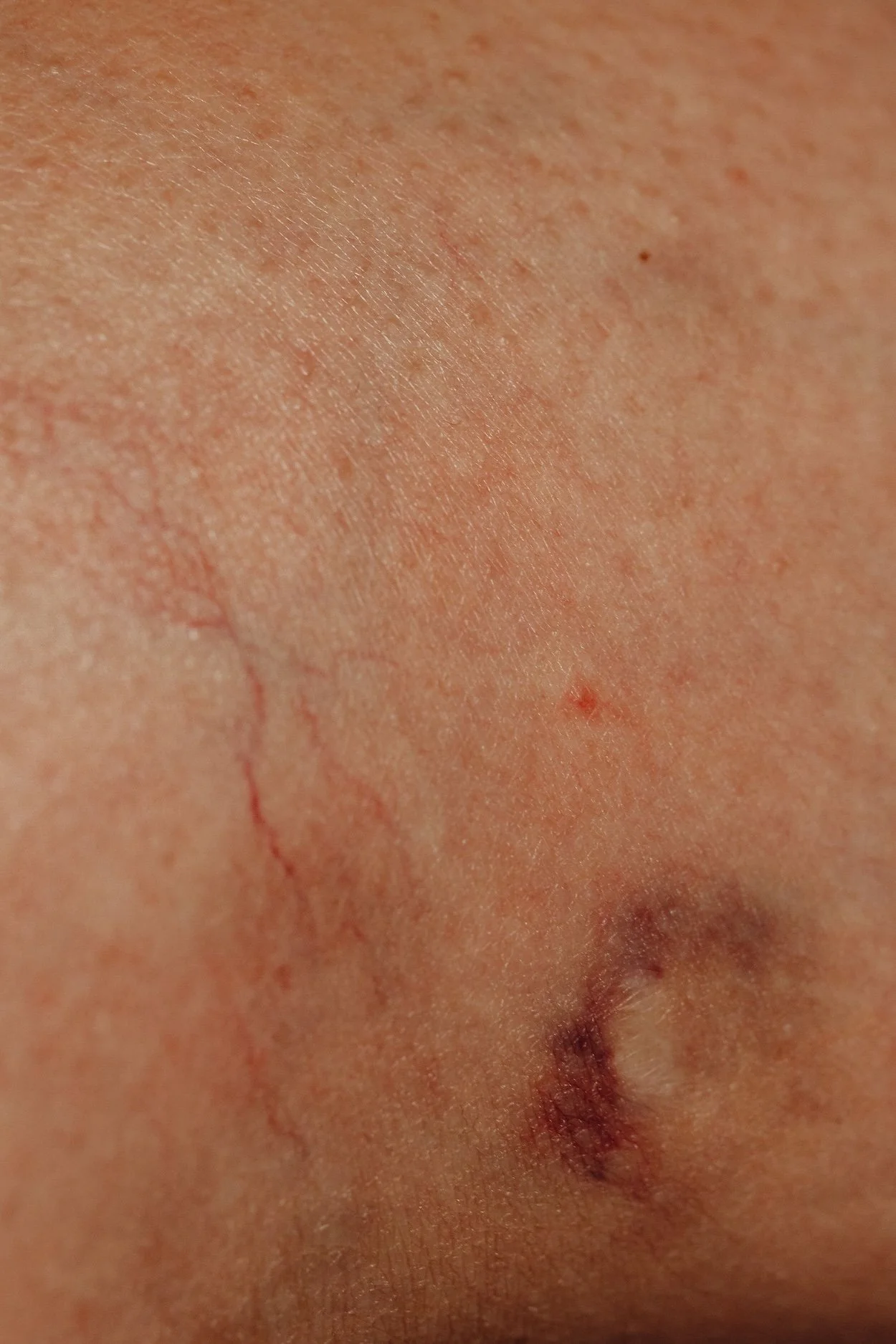
Ready to learn how, exactly, laser treatments work for dilated capillaries? Here’s an overview of the process called selective photothermolysis:
Targeted light
Laser devices emit a specific wavelength of light that’s easily absorbed by hemoglobin, or the proteins that carry red blood cells through veins and vessels. As it penetrates the skin, this light energy is converted into heat, which is concentrated inside the vessel, leaving surrounding skin relatively untouched.
Vessel collapse
Vessel collapse sounds like a traumatic event, but it’s simply the term for controlled damage and destruction of these superficial blemishes.
Once enough heat builds inside the dilated capillary, the vessel walls stick together and seal shut, stopping blood flow. Your body immediately reroutes blood through healthy vessels nearby. As a result, the targeted lines gradually disappear.
Natural absorption
So, what actually happens to the dilated capillaries treated with laser therapy?
In the weeks after laser treatment for dilated capillaries, certain immune cells called macrophages begin breaking down the damaged tissue. Then, tissue fragments are gradually eliminated through the lymphatic system. Over time, treated vessels become less visible until disappearing entirely.
Common types of lasers and their results
Not all laser devices deliver the optimal light energy to destroy dilated capillaries without affecting surrounding tissues. Here are the best forms of laser technology to correct uneven skin tone:
Pulsed dye laser (PDL)
Unlike IPL, which uses diffused light waves to gradually improve skin discoloration, fine lines, and wrinkles, Pulsed dye laser (PDL) is a true laser that emits a concentrated beam to precisely target dilated capillaries, rosacea, and deep discoloration.
Vascular lasers (1064nm / Nd:YAG)
Many lasers are designed specifically for use on dilated capillaries, spider veins, and other vascular lesions. Often found in dermatology clinics, spas, and other professional settings, these devices offer lots of variety for any skin type and a wide range of cosmetic concerns.
For example, equipment like our Nd:YAG Cutera Excel HR laser utilizes a 1064 nm wavelength to penetrate further into the dermis to target deeper discoloration and stimulate collagen production. This wavelength is treated with multiple concerns depending on the settings used. It is used for laser genesis, vascular lesions, and laser hair removal. It is the safest wavelength to prevent issues.
Multiple sessions
Even though dilated capillaries are highly responsive to laser treatments, it’s still common to complete multiple sessions depending on a variety of factors. The number of treatments needed is often determined by:
Number of visible vessels
How long the lesion has been there
Size and depth of the dilated capillaries
Underlying skin conditions
Skin type
Laser technology used
Based on these factors, an effective treatment series might include 1 to 6 sessions spaced 4 to 8 weeks apart.
What to expect after laser treatment for dilated capillaries
Every cosmetic procedure is different, and even advanced, non-invasive laser therapy for dilated capillaries can cause various side effects and yield diverse results. Let’s explore what you can expect after treatment.
Minor side effects
Many people experience mild redness and swelling that lasts several hours after laser treatment for dilated capillaries. In very rare cases, blistering, bruising, and pigmentation changes may occur. However, these typically resolve within a few days.
Protection from sun exposure is essential during the aftercare period, as skin is more susceptible to UV damage. Apply and reapply broad-spectrum mineral sunscreen every few hours to prevent age spots and other forms of hyperpigmentation.
For the best results, avoid makeup, sweating, and extreme temperatures, such as hot tubs and saunas, for 72 hours. In the week after treatment, stick to gentle skincare products and focus on hydration and sun protection instead of harsh exfoliants. Avoid any active ingredients for 72hrs after your laser treatment.
Permanent removal
Once effectively sealed shut, targeted capillaries will break down and be permanently flushed out of the body. But it’s important to note that not every vessel responds completely after a single session, so multiple sessions may be necessary.
New vessels can form
Another consideration to understand is that new capillaries can form – and break – in the same facial area over time. Even after a successful treatment series, it’s possible to develop similar lines. However, this process usually occurs over several years.
Factors that increase these risks include:
Sun damage
Extreme temperatures
Alcohol consumption
Skin injuries
Genetics
Medical conditions like rosacea
Explore your treatment options at Banyan Skin & Wellness!
Banyan Skin & Wellness is your source for custom facials and laser therapy! Schedule a consultation today to begin your journey to healthy, revitalized skin.